


In today’s world of precision surveying, construction, and agriculture, the demand for accurate location data has never been higher. RTK (Real-Time Kinematic) GPS systems are at the forefront of this technology, providing centimeter-level accuracy for a variety of applications. However, with multiple options available in the market, choosing the right rtk gps system for your project can seem daunting. This article will guide you through the key factors to consider to ensure optimal performance and efficiency.
Understanding RTK GPS Technology
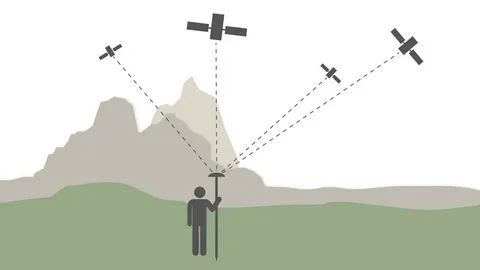
RTK GPS systems enhance standard GPS accuracy by using a base station and a rover unit. The base station sends correction signals to the rover, allowing it to achieve real-time positioning with exceptional precision. This level of accuracy makes RTK GPS ideal for applications such as land surveying, precision agriculture, construction layout, and autonomous vehicle navigation.
Key Factors to Consider
1. Accuracy Requirements
Before selecting an RTK GPS system, assess the accuracy requirements of your project. Some tasks may require centimeter-level precision, while others can work with sub-meter accuracy. Understanding this will help you avoid overpaying for a system that exceeds your needs.
2. Communication and Connectivity
RTK GPS systems rely on reliable communication between the base and rover units. Check for compatibility with cellular networks, radio frequencies, or satellite corrections. The communication range should align with the geographical scope of your project.
3. Durability and Environment
Consider the operating environment of your project. Systems used in construction sites or harsh agricultural fields must be rugged, water-resistant, and capable of handling extreme temperatures.
4. Ease of Use and Integration
Modern RTK GPS systems often integrate with software for mapping, surveying, and data analysis. Choose a system that is user-friendly and compatible with your existing tools to streamline workflow and reduce training time.
Cost Considerations
While cost is an important factor, it should be balanced with the features and reliability of the system. Cheaper systems may lack essential features or suffer from inconsistent performance, ultimately affecting project timelines and results.
Conclusion
Choosing the right RTK GPS system for your project requires careful evaluation of accuracy, communication, durability, and ease of use. By understanding your project’s specific needs and assessing available options, you can invest in a system that improves efficiency, accuracy, and overall project outcomes. Remember, the right RTK GPS system is not necessarily the most expensive one—it’s the one that fits your project requirements perfectly.
